
Struggling with inaccurate energy meters and billing disputes? The problem often lies in choosing the wrong testing method, which can compromise grid stability and your bottom line.
The best method depends on your goal. Laboratory testing provides controlled, standardized validation for certification and quality assurance. On-site testing checks a meter's actual performance in its real-world environment, making it ideal for maintenance and troubleshooting.
Choosing between testing in a controlled lab or out in the field can feel complicated. Each approach has unique strengths and weaknesses that make it suitable for different tasks. Understanding these differences is the first step toward building a reliable and accurate metering program. Let's break down what sets them apart and how you can leverage both to ensure your measurements are always on point.
On-site vs. Laboratory Testing: What’s the Core Difference?
Confused about why you would need two different testing methods? Choosing the wrong one can waste valuable time and money, leading to unresolved issues and inaccurate data.
The core difference is the environment. Laboratory testing isolates the meter to measure its potential performance under perfect, repeatable conditions. On-site testing evaluates the meter as part of a live system, capturing its actual performance with real-world variables.
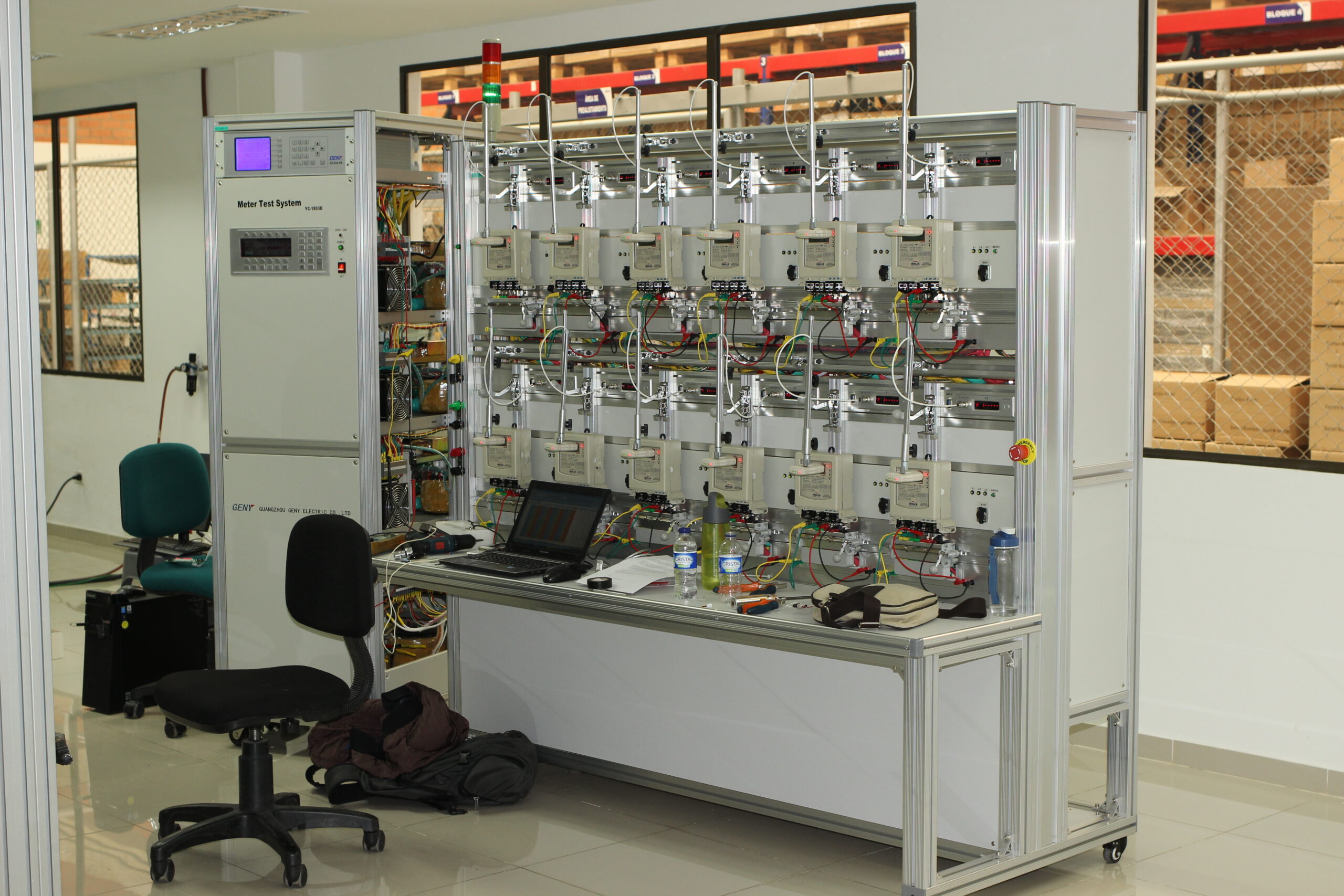
To understand this better, let's dive deeper. Think of laboratory testing as a controlled experiment. We place the meter in a test bench where we can precisely manage factors like voltage, current, temperature, and electromagnetic interference. This allows us to verify if the meter's design and manufacturing meet strict international standards like IEC 62053. It’s perfect for answering the question: "Is this meter built correctly?"
On-site testing, on the other hand, is a reality check. It assesses the meter after it’s been installed, where it’s exposed to unpredictable grid conditions, potential wiring errors, and local interference. This method answers a different question: "Is this meter working correctly right now, in this specific location?" Here is a simple breakdown:
| Feature | Laboratory Testing | On-site Testing |
|---|---|---|
| Environment | Controlled & Standardized | Real-world & Variable |
| Purpose | Certification, Type Approval, R&D | Maintenance, Troubleshooting |
| Focus | Meter's inherent accuracy | System's operational accuracy |
| Key Benefit | High precision & repeatability | Detects installation & field issues |
What key factors should you consider when choosing between them?
Making a decision between lab and field testing can feel overwhelming. A poor choice can lead to incomplete data, unnecessary expenses, or compliance failures.
Focus on your primary goal, budget, and logistical needs. Certification and type approval demand a lab. Routine checks, commissioning, and dispute resolution are better suited for practical, cost-effective on-site testing.
Selecting the right approach doesn't have to be complex. It comes down to weighing a few critical factors against your specific situation.
1. Purpose of the Test
First, ask yourself what you need to achieve. Are you certifying a brand-new meter design from a manufacturer? That requires the controlled environment of a laboratory. Or are you responding to a customer who claims their bill is too high? A quick, on-site test is the most efficient way to investigate. Acceptance testing for a new shipment of meters might even involve a hybrid approach—lab testing a sample, then field-testing another sample upon installation.
2. Accuracy vs. Practicality
A laboratory provides the highest level of precision, eliminating external variables to measure the meter’s true capability. However, this precision comes at a cost and requires removing the meter from service. On-site testing offers practical, real-world accuracy. It may be less precise due to fluctuating conditions, but it's invaluable for diagnosing issues that only appear in a live environment.
3. Cost and Logistics
Sending meters to a lab involves shipping, administrative overhead, and the cost of the testing itself. More importantly, it means downtime for that metering point. On-site testing, using portable equipment like our GENY series, is generally faster and more cost-effective per test, avoiding service interruptions entirely.
How to verify manufacturer’s quality claims in both scenarios?
Manufacturers always promise top-tier performance and quality. But trusting these claims without verification can expose you to faulty equipment, leading to financial losses and compliance risks.
In the lab, demand third-party type test reports based on standards like IEC 62053. On-site, use calibrated portable test equipment to randomly check newly installed meters, ensuring their real-world performance matches the lab-certified claims.
You don't have to take a manufacturer's word for it. You can, and should, verify their claims. The method just changes depending on where you are.
In a laboratory setting, verification is formal and document-based. The best practice is to request official type test certificates from an accredited, independent third-party lab. These documents prove the meter model has passed rigorous tests for accuracy, durability, and safety under various conditions. For large orders, we often advise our clients to conduct their own acceptance testing on a random sample from the batch to confirm that the production quality matches the certified design. This step ensures there are no surprises down the line.
When you're out in the field, verification is more hands-on. This is where you confirm that the lab performance translates to the real world. After a new batch of meters is installed, a solid quality assurance program includes spot-checking a statistically significant number of them using a high-accuracy portable standard. If the on-site error readings are consistently higher than what the lab reports specified, it could signal installation problems, transport damage, or a batch quality issue that slipped through.
What certifications should you look for in meter testing?
Navigating the world of technical standards can be confusing. Choosing a meter that lacks the proper certification can result in non-compliance, fines, and the need for costly replacements.
For international credibility, look for compliance with the IEC 62052 and 62053 series, which define accuracy classes. In Europe, MID (Measuring Instruments Directive) approval, often shown with EN 50470 compliance, is essential for billing purposes.
Certifications are your guarantee that a meter has been properly tested and meets established benchmarks for quality and accuracy. While there are many regional standards, a few key international ones are globally recognized.
The most fundamental are from the International Electrotechnical Commission (IEC).
- IEC 62052-11: This covers the general requirements and tests for all electricity metering equipment. Think of it as the foundation.
- IEC 62053 Series: This is a group of standards that specifies the accuracy requirements. For example, IEC 62053-22 is for "Class 0.2S" and "Class 0.5S" static meters, which are highly accurate and used at generation and transmission points. "Class 1" or "Class 2" meters are more common for residential or commercial customers.
In Europe, the Measuring Instruments Directive (MID) is critical. It is a legal requirement for any meter used for billing. A meter with MID approval is certified to be accurate and reliable enough for trade. This is often accompanied by certification to the EN 50470 standard, which is the harmonized European norm for electricity meters. When you see these certifications, you know the meter has undergone extensive laboratory testing to prove its worth.
When to use on-site testing vs. lab testing for energy meters?
Knowing the theory is great, but applying it is what matters. Using the wrong test for a specific situation can be inefficient, ineffective, and lead to the wrong conclusions.
Use lab testing for formal validation: type approval, pre-deployment batch verification, and deep forensic analysis. Use on-site testing for operational tasks: commissioning, routine checks, troubleshooting, and resolving customer billing disputes.
The best metering programs don't choose one method over the other; they use both strategically. The key is to match the tool to the job at hand. Here’s a simple guide to help you decide.
Use Laboratory Testing When:
- Certifying a New Meter Model: Before a meter model can be sold, it must undergo rigorous type approval testing in an accredited lab to prove it meets international standards.
- Quality Control on New Shipments: When you receive a large order of meters, sending a small, random sample to the lab for acceptance testing verifies the entire batch's quality.
- Investigating Systemic Failures: If a particular meter model is failing prematurely across your network, a lab can perform forensic analysis to find the root cause of the design or manufacturing flaw.
Use On-site Testing When:
- Commissioning New Installations: After a new meter is installed, an on-site test confirms that the wiring is correct and the entire system is reading accurately from day one.
- Routine Maintenance: Periodic on-site checks on aging meters help you detect accuracy drift before it becomes a major billing issue.
- Resolving Customer Complaints: When a customer disputes a high bill, an on-site test provides quick, transparent evidence of the meter's current accuracy.
- Troubleshooting: If you suspect a problem is related to local conditions like harmonic distortion or incorrect CT/VT ratios, only an on-site test can diagnose it.
Conclusion
Laboratory and on-site testing are not opponents but partners. A complete strategy uses lab validation for certification and quality assurance, complemented by on-site audits for real-world performance verification.
Struggling with inaccurate energy meters and billing disputes? The problem often lies in choosing the wrong testing method1, which can compromise grid stability and your bottom line.
The best method depends on your goal. Laboratory testing provides controlled, standardized validation2 for certification and quality assurance. On-site testing checks a meter's actual performance in its real-world environment3, making it ideal for maintenance and troubleshooting.
Choosing between testing in a controlled lab or out in the field can feel complicated. Each approach has unique strengths and weaknesses that make it suitable for different tasks. Understanding these differences is the first step toward building a reliable and accurate metering program. Let's break down what sets them apart and how you can leverage both to ensure your measurements are always on point.
On-site vs. Laboratory Testing: What’s the Core Difference?
Confused about why you would need two different testing methods? Choosing the wrong one can waste valuable time and money4, leading to unresolved issues and inaccurate data.
The core difference is the environment. Laboratory testing isolates the meter to measure its potential performance under perfect, repeatable conditions. On-site testing evaluates the meter as part of a live system, capturing its actual performance with real-world variables.
To understand this better, let's dive deeper. Think of laboratory testing as a controlled experiment. We place the meter in a test bench where we can precisely manage factors like voltage, current, temperature, and electromagnetic interference. This allows us to verify if the meter's design and manufacturing meet strict international standards like IEC 62053. It’s perfect for answering the question: "Is this meter built correctly?"
On-site testing, on the other hand, is a reality check. It assesses the meter after it’s been installed, where it’s exposed to unpredictable grid conditions, potential wiring errors, and local interference. This method answers a different question: "Is this meter working correctly right now, in this specific location?" Here is a simple breakdown:
| Feature | Laboratory Testing | On-site Testing |
|---|---|---|
| Environment | Controlled & Standardized | Real-world & Variable |
| Purpose | Certification, Type Approval, R&D | Maintenance, Troubleshooting |
| Focus | Meter's inherent accuracy | System's operational accuracy |
| Key Benefit | High precision & repeatability | Detects installation & field issues |
What key factors should you consider when choosing between them?
Making a decision between lab and field testing can feel overwhelming. A poor choice can lead to incomplete data, unnecessary expenses, or compliance failures.
Focus on your primary goal, budget, and logistical needs. Certification and type approval demand a lab. Routine checks, commissioning, and dispute resolution are better suited for practical, cost-effective on-site testing5.
Selecting the right approach doesn't have to be complex. It comes down to weighing a few critical factors against your specific situation.
1. Purpose of the Test
First, ask yourself what you need to achieve. Are you certifying a brand-new meter design from a manufacturer? That requires the controlled environment of a laboratory. Or are you responding to a customer who claims their bill is too high? A quick, on-site test is the most efficient way to investigate. Acceptance testing for a new shipment of meters might even involve a hybrid approach—lab testing a sample, then field-testing another sample upon installation.
2. Accuracy vs. Practicality
A laboratory provides the highest level of precision, eliminating external variables to measure the meter’s true capability. However, this precision comes at a cost and requires removing the meter from service. On-site testing offers practical, real-world accuracy6. It may be less precise due to fluctuating conditions, but it's invaluable for diagnosing issues that only appear in a live environment.
3. Cost and Logistics
Sending meters to a lab involves shipping, administrative overhead, and the cost of the testing itself. More importantly, it means downtime for that metering point. On-site testing, using portable equipment like our GENY series, is generally faster and more cost-effective per test, avoiding service interruptions entirely.
How to verify manufacturer’s quality claims7 in both scenarios?
Manufacturers always promise top-tier performance and quality. But trusting these claims without verification can expose you to faulty equipment, leading to financial losses and compliance risks.
In the lab, demand third-party type test reports based on standards like IEC 62053. On-site, use calibrated portable test equipment to randomly check newly installed meters, ensuring their real-world performance matches the lab-certified claims.
You don't have to take a manufacturer's word for it. You can, and should, verify their claims. The method just changes depending on where you are.
In a laboratory setting, verification is formal and document-based. The best practice is to request official type test certificates from an accredited, independent third-party lab. These documents prove the meter model has passed rigorous tests for accuracy, durability, and safety under various conditions. For large orders, we often advise our clients to conduct their own acceptance testing on a random sample from the batch to confirm that the production quality matches the certified design. This step ensures there are no surprises down the line.
When you're out in the field, verification is more hands-on. This is where you confirm that the lab performance translates to the real world. After a new batch of meters is installed, a solid quality assurance program includes spot-checking a statistically significant number of them using a high-accuracy portable standard. If the on-site error readings are consistently higher than what the lab reports specified, it could signal installation problems, transport damage, or a batch quality issue that slipped through.
What certifications should you look for in meter testing?
Navigating the world of technical standards can be confusing. Choosing a meter that lacks the proper certification8 can result in non-compliance, fines, and the need for costly replacements.
For international credibility, look for compliance with the IEC 62052 and 62053 series, which define accuracy classes. In Europe, MID (Measuring Instruments Directive) approval, often shown with EN 50470 compliance, is essential for billing purposes.
Certifications are your guarantee that a meter has been properly tested and meets established benchmarks for quality and accuracy. While there are many regional standards, a few key international ones are globally recognized.
The most fundamental are from the International Electrotechnical Commission (IEC).
- IEC 62052-11: This covers the general requirements and tests for all electricity metering equipment. Think of it as the foundation.
- IEC 62053 Series: This is a group of standards that specifies the accuracy requirements. For example, IEC 62053-22 is for "Class 0.2S" and "Class 0.5S" static meters, which are highly accurate and used at generation and transmission points. "Class 1" or "Class 2" meters are more common for residential or commercial customers.
In Europe, the Measuring Instruments Directive (MID) is critical. It is a legal requirement for any meter used for billing. A meter with MID approval is certified to be accurate and reliable enough for trade. This is often accompanied by certification to the EN 50470 standard, which is the harmonized European norm for electricity meters. When you see these certifications, you know the meter has undergone extensive laboratory testing9 to prove its worth.
When to use on-site testing vs. lab testing for energy meters?
Knowing the theory is great, but applying it is what matters. Using the wrong test for a specific situation can be inefficient, ineffective, and lead to the wrong conclusions.
Use lab testing for formal validation: type approval, pre-deployment batch verification, and deep forensic analysis. Use on-site testing for operational tasks: commissioning, routine checks, troubleshooting, and resolving customer billing disputes.
The best metering programs don't choose one method over the other; they use both strategically. The key is to match the tool to the job at hand. Here’s a simple guide to help you decide.
Use Laboratory Testing When:
- Certifying a New Meter Model: Before a meter model can be sold, it must undergo rigorous type approval testing10 in an accredited lab to prove it meets international standards.
- Quality Control on New Shipments: When you receive a large order of meters, sending a small, random sample to the lab for acceptance testing verifies the entire batch's quality.
- Investigating Systemic Failures: If a particular meter model is failing prematurely across your network, a lab can perform forensic analysis to find the root cause of the design or manufacturing flaw.
Use On-site Testing When:
- Commissioning New Installations: After a new meter is installed, an on-site test confirms that the wiring is correct and the entire system is reading accurately from day one.
- Routine Maintenance: Periodic on-site checks on aging meters help you detect accuracy drift before it becomes a major billing issue.
- Resolving Customer Complaints: When a customer disputes a high bill, an on-site test provides quick, transparent evidence of the meter's current accuracy.
- Troubleshooting: If you suspect a problem is related to local conditions like harmonic distortion or incorrect CT/VT ratios, only an on-site test can diagnose it.
Conclusion
Laboratory and on-site testing are not opponents but partners. A complete strategy uses lab validation for certification and quality assurance, complemented by on-site audits for real-world performance verification11.
Research studies or articles can provide evidence on how improper testing methods affect grid stability and financial performance. ↩
Citing standards or research can substantiate the claim about the benefits of laboratory testing. ↩
Case studies or research can provide concrete examples of how on-site testing performs in real-world conditions. ↩
Research or case studies can provide quantitative data on the costs associated with incorrect testing methods. ↩
Research can provide data on the cost-effectiveness of on-site testing compared to laboratory methods. ↩
Research or case studies can illustrate the effectiveness of on-site testing in achieving real-world accuracy. ↩
Guidelines or standards can provide a framework for verifying manufacturer claims effectively. ↩
Research or case studies can provide evidence of the financial and operational consequences of using unverified meters. ↩
Citing studies or standards can substantiate the claim about the reliability of MID-approved meters. ↩
Research or guidelines can provide detailed information on the type approval process for energy meters. ↩
Research or case studies can illustrate the advantages of using both lab and on-site testing methods. ↩
