
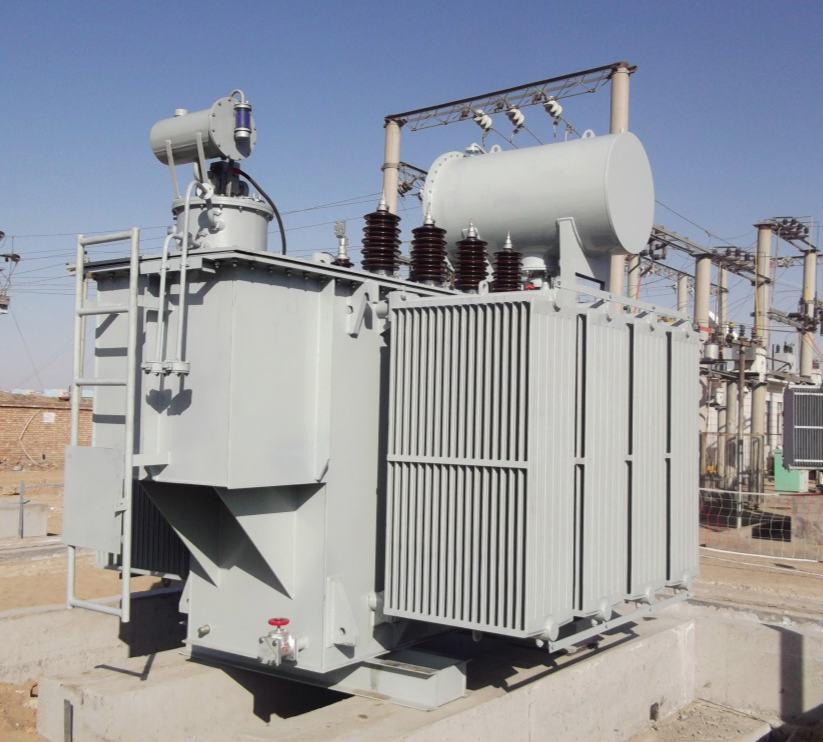
Common Transformer Types and the Main Electrical Tests They Require
Transformers are essential equipment in power systems, but a “transformer” is not a single, uniform product. Different insulating media, cooling methods, phase configurations, and application types all affect transformer construction and testing requirements.
In the international standards framework, IEC 60076-1 serves as the general standard for conventional power transformers, covering single-phase, three-phase, and auto-transformers. Liquid-immersed and dry-type transformers are then addressed separately by IEC 60076-2 and IEC 60076-11 in relation to temperature rise, cooling, and product scope.
For that reason, transformer testing usually starts with one basic question: what type of transformer is being tested, and which test items apply to that category?
1. Common Transformer Classifications
From the perspective of international engineering practice, the most common transformer classifications can be grouped into four dimensions.
By Insulating Medium and Construction
The two main categories are typically liquid-immersed transformers and dry-type transformers. IEC 60076-2 directly addresses the cooling methods and temperature rise testing of liquid-immersed transformers, while IEC 60076-11 applies to dry-type power transformers and explicitly excludes certain special categories such as instrument transformers, starting transformers, and testing transformers.
In conventional power transformer applications, liquid-immersed and dry-type designs remain the two main product lines.
By Phase Configuration
IEC 60076-1 applies to both three-phase and single-phase power transformers, so phase configuration remains one of the most basic classification methods.
In engineering practice, three-phase transformers are more common in transmission and distribution systems, while single-phase units are more often used in specific applications, testing work, or localised installations.
By Cooling Method
For liquid-immersed transformers, the cooling method itself is a standardised identification category. IEC 60076-2 clearly states that liquid-immersed transformers are identified by cooling method, with corresponding temperature rise limits and test procedures.
In practical applications, common methods such as natural oil circulation with natural air cooling, forced oil circulation with air cooling, or water cooling are often closely related to transformer capacity, installation conditions, and thermal design requirements.
By Application
From an application perspective, the industry commonly distinguishes between power transformers, distribution transformers, and special-purpose transformers.
IEC 60076-1 itself notes that certain smaller or special transformers are covered by separate IEC standards. This also shows that conventional power transformers and testing or specialised transformers are not treated as a single unified category in the standards system.
2. Which Stages Do Transformer Tests Usually Cover?
From a lifecycle perspective, transformer testing does not take place at only one stage. There are factory tests before delivery, commissioning or acceptance tests before energisation, and condition monitoring and diagnostic tests during operation according to maintenance strategy.
ANSI/NETA ATS is positioned as an acceptance testing specification for initial energisation, intended to confirm that equipment and systems are suitable for first-time service. At the same time, CIGRE’s maintenance guidance places condition monitoring, maintenance planning, and diagnostic testing within the same overall maintenance framework, showing that testing remains just as important during the operating stage.
If grouped by testing logic, transformer tests are often understood in two broad categories:
- Insulation and dielectric tests, which focus on whether the transformer can withstand the required electrical stress
- Electrical performance and condition diagnostic tests, which focus on whether the windings, losses, impedance, oil condition, and mechanical status remain normal
University teaching materials and NETA technical training commonly place ratio, winding resistance, no-load and short-circuit tests, insulation checks, dielectric loss, temperature rise, DGA, and FRA within the same transformer testing framework.
3. What Do the Main Electrical Tests Actually Check?
3.1 Insulation and Dielectric Tests: Can the Transformer Withstand Electrical Stress?
The main purpose of this group of tests is to confirm that the main insulation system and related insulation structures remain sound. IEC 60076-3 clearly specifies insulation requirements, corresponding insulation tests, applicable dielectric tests, and minimum dielectric test levels.
Induced voltage tests, applied power-frequency withstand tests, and impulse-related dielectric tests are all key parts of transformer dielectric capability verification.
In maintenance and diagnostic work, insulation resistance, polarisation-related indicators, and dielectric loss factor measurements such as power factor and capacitance are also widely used.
NETA transformer technical training places insulation power factor, capacitance, winding resistance, turns ratio, and excitation current among the common maintenance and diagnostic test items, which shows that these tests are often used as condition assessment tools rather than only as one-time factory checks.
3.2 Electrical Characteristic Tests: Windings, Ratio, Losses, and Impedance
These tests are closer to the question of whether the transformer is still operating as designed. Common items include winding DC resistance, turns ratio, polarity or vector group, no-load loss and no-load current, and short-circuit impedance and load loss.
University teaching materials commonly list these as the most typical transformer routine and type tests, and NETA training content similarly includes winding resistance, turns ratio, excitation current, and impedance or leakage reactance.
Each of these tests has a clear purpose:
- Winding resistance helps assess winding connections, welding quality, and tap changer contact condition
- Turns ratio and vector group confirm transformation accuracy and correct connection arrangement
- No-load tests mainly evaluate core loss and excitation characteristics
- Short-circuit or impedance-related tests are more relevant to copper loss, leakage reactance, and changes caused by winding stress
For commissioning and maintenance testing, these are basic items used to determine whether the transformer’s functional performance is still within its intended operating range.
3.3 Temperature Rise Test: Thermal Performance Under Sustained Operation
The importance of temperature rise testing lies in the fact that it is closer to the transformer’s long-term thermal condition in service. IEC 60076-2 not only defines temperature rise limits for liquid-immersed transformers, but also sets out the corresponding test methods.
For large-capacity equipment, thermal design and cooling capability directly affect service life, overload capability, and long-term reliability, which is why temperature rise testing is often treated as a key type-test item.
3.4 Oil Tests and Dissolved Gas Analysis: The Condition of the Insulating Medium in Liquid-Immersed Transformers
For liquid-immersed transformers, oil testing is one of the most typical diagnostic areas. IEC 60156 specifies the method for determining the breakdown voltage of insulating liquids at power frequency and applies to a range of insulating liquids.
IEC 60599 provides guidance on how to interpret dissolved gas or free gas concentrations in order to diagnose the condition of oil-filled electrical equipment in service and to suggest appropriate follow-up actions. IEC 60567 further sets out guidance for sampling and analysis of dissolved gases in oil and free gases in relays.
This means that “oil testing” actually covers two different levels:
- The dielectric performance of the oil itself, such as breakdown voltage
- The use of DGA to assess whether internal overheating, discharge, or other abnormal conditions may be developing inside the transformer
3.5 Winding Mechanical Condition Tests: Structural Change After Short-Circuit Stress or Transport
In addition to electrical parameters, transformers are also exposed to mechanical stress. CIGRE’s technical report on FRA clearly defines Frequency Response Analysis as a method used to detect winding displacement and assess mechanical condition, and it provides typical response patterns and case examples.
For this reason, when a transformer has experienced short-circuit stress or when internal winding displacement is suspected after transport, FRA is often used as an important method for determining whether its mechanical condition has changed.
References
- IEC 60076-1:2011, Power Transformers – Part 1: General.
- IEC 60076-2:2011, Power Transformers – Part 2: Temperature Rise for Liquid-Immersed Transformers.
- IEC 60076-3:2013+A1:2018, Insulation Levels, Dielectric Tests and External Clearances in Air.
- IEC 60076-11:2018, Dry-Type Transformers.
- IEC 60156:2025, Insulating Liquids – Determination of the Breakdown Voltage at Power Frequency – Test Method.
- IEC 60599:2022, Guidance on the Interpretation of Dissolved and Free Gases Analysis.
- IEC 60567:2023, Sampling of Free Gases and Analysis of Free and Dissolved Gases in Mineral Oils and Other Insulating Liquids – Guidance.
- CIGRE, Guide for Transformer Maintenance.
- CIGRE, Mechanical-Condition Assessment of Transformer Windings Using Frequency Response Analysis (FRA).
- ANSI/NETA ATS-2025, Acceptance Testing Specifications for Electrical Power Equipment and Systems.
- NETA technical seminar pages on transformer diagnostics.
- University teaching material on common transformer routine, type, and special tests.
