
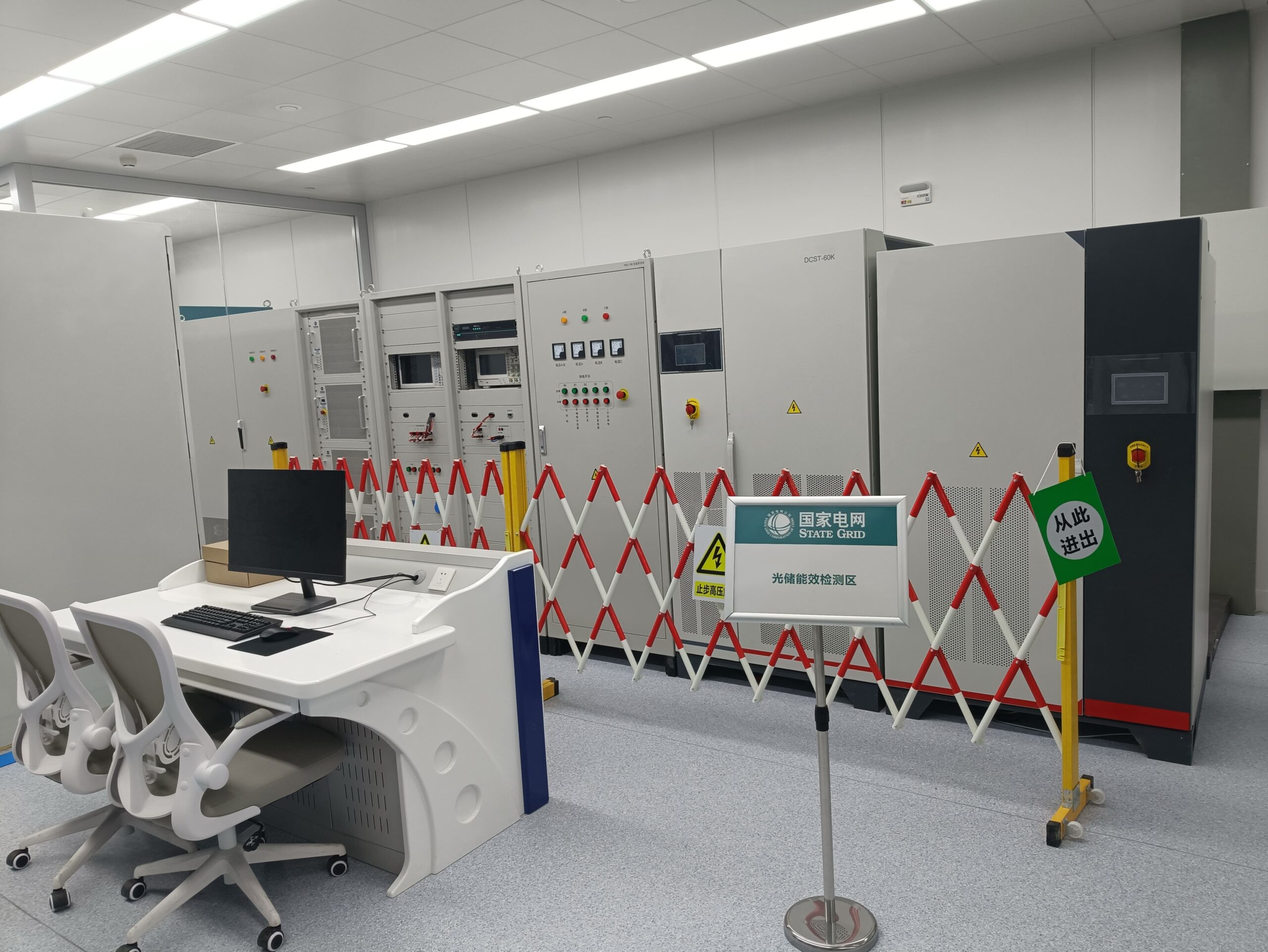
EV charger testing is not just about whether a charger can deliver power. For market access and project delivery, testing usually needs to answer several questions at the same time: Is the equipment safe? Does it meet EMC requirements? Can the interface and communication functions work together properly? Is the metering reliable? And can the equipment operate stably in real installation environments?
Although the regulatory systems in China, the EU, and the US are not exactly the same, the underlying logic is highly consistent: safety comes first, compatibility comes next, and metering, deployability, and long-term operational reliability must also be ensured.
1. What Standards Mainly Define EV Charger Testing in China?
In China, EV charger testing is primarily based on the national standards system. At the general level, GB/T 18487.1-2023 applies to Part 1 of the conductive charging system for electric vehicles, covering general requirements. On the safety side, GB 39752-2024 applies to the safety requirements for electric vehicle supply equipment.
Public information from China’s market regulators also makes it clear that the two mandatory national standards supporting the subsequent compulsory certification work are GB 39752-2024, Safety Requirements for Electric Vehicle Supply Equipment, and GB 44263-2024, Safety Requirements for Electric Vehicle Conductive Charging Systems.
If the equipment involves DC charging communication in China, GB/T 27930-2023, Digital Communication Protocol between Off-Board Conductive Charger and Electric Vehicle, is a key standard. If the product involves metering for AC charging billing, GB/T 28569-2024, Electric Energy Metering for AC EV Charging Stations, also becomes important.
From a regulatory perspective, China has now brought electric vehicle supply equipment under CCC compulsory product certification management. According to public reports by Xinhua News Agency, certification bodies began accepting certification applications on 1 March 2025. From 1 August 2026, electric vehicle supply equipment that has not obtained a CCC certificate and certification mark may not be manufactured, sold, imported, or used in other business activities.
The same reports also note that one of the key focuses of CCC is strict testing of critical safety indicators such as electric shock protection, short-circuit protection, fire resistance, and flame resistance.
In the Chinese market, the testing scope can be broadly grouped into five dimensions:
- Electrical safety, including electric shock protection, insulation, grounding, and protection under fault conditions
- Electromagnetic compatibility (EMC)
- Interfaces and connection devices
- Vehicle-charger communication compatibility
- Metering and billing accuracy
2. Why Does EV Charger Testing in International Markets Look More Like “Regulatory Framework + Technical Standards”?
There is no single, fully unified “global EV charger certification.” In practice, the more common situation is that different regions use different regulatory frameworks to manage market access, and then apply technical standards such as IEC, ISO, UL, and FCC to define the actual testing requirements.
That is why the compliance path for the same EV charger can look quite different when entering China, the EU, or the US.
Take the EU as an example. Companies often say they are “doing CE,” but the more accurate way to describe it is this: the product must comply with the relevant EU regulatory requirements, after which the manufacturer completes the conformity assessment and affixes the CE marking.
For charging equipment, the most common regulatory basis usually includes the Low Voltage Directive (LVD) and the EMC Directive. If the equipment falls within the scope of electrical and electronic equipment, RoHS is also often involved.
At the technical standard level, public standard pages show that IEC 61851-1 applies to the general requirements for EV supply equipment, while IEC 61851-21-2 defines EMC requirements for off-board charging equipment. For DC charging stations, the industry will typically continue to refer to standards such as IEC 61851-23 for DC charging equipment.
The US market follows a similar logic, but the language used is different. On the safety side, public standard pages show that UL 2202 applies to DC conductive charging equipment for electric vehicles.
On the electromagnetic and radio-frequency side, if the product contains relevant digital circuitry or wireless functions, the applicable compliance path will often need to be assessed against FCC Part 15. FCC Part 15 covers intentional radiators, unintentional radiators, and incidental radiators, and Subpart B specifically applies to unintentional radiators.
In the US, EV charger testing therefore usually needs to consider both safety standards and emission compliance requirements related to digital circuitry or wireless functionality.
From a communication-layer perspective, international testing also becomes easier to understand. ISO 15118 deals with communication between the vehicle and the EVSE, focusing on identification, charging and discharging control, and higher-level communication between the EV and the supply equipment.
OCPP, by contrast, deals with the open communication protocol between the charging station and the backend management system. These two standards apply to different testing layers.
3. What Test Items Are Typically Included in EV Charger Testing?
1) Safety Testing
Safety is always the first layer of EV charger testing. In China, GB 39752-2024 directly addresses safety requirements for electric vehicle supply equipment, and Xinhua’s CCC-related reports also explicitly identify electric shock protection, short-circuit protection, fire resistance, and flame resistance as key test directions.
In the EU, the goal of the LVD is likewise to cover health and safety risks in electrical equipment. In the US, UL 2202 defines the safety scope for DC charging equipment from the perspective of installation and use conditions.
No matter how the market is divided, safety testing always comes first.
2) EMC Testing
EMC is the second major area that cannot be ignored. In China, the relevant requirements are linked to the GB/T 18487 supporting framework. In the EU, there is the EMC Directive at the regulatory level, and IEC 61851-21-2 further defines EMC requirements for off-board charging equipment at the technical level.
In the US, if the device falls within the scope of FCC Part 15 radiators, it must also meet the corresponding technical and administrative requirements.
For EV chargers, the focus here is not only whether the charger interferes with other equipment, but also whether it can continue to operate stably when exposed to external electromagnetic disturbance.
3) Interface and Connection Device Testing
Interface testing may look basic, but it is actually critical. It relates to mechanical durability, contact reliability, long-term consistency in outdoor use, and compatibility across different vehicle models and different connection devices.
In engineering projects, interface issues are often not the most “advanced” problems, but they are among the easiest to expose during real deployment.
In the Chinese standards system, interface requirements are mainly covered by the GB/T 20234 series. In international projects, they are more often tied to the interface systems adopted in each region and their corresponding technical standards.
4) Communication and Interoperability Testing
EV chargers are increasingly becoming digital terminals with power output, which is why communication and interoperability have moved from optional features to core test items.
In China’s DC charging context, GB/T 27930-2023 is the key protocol standard. In international projects, higher-level vehicle-charger communication often relies on ISO 15118, while charger-to-backend communication often relies on OCPP.
In practice, this means testing is not only about protocol support on paper, but also about whether different devices, software versions, and system platforms can truly interoperate.
5) Metering and Billing Testing
If the charger is used for transaction-based billing, testing must go further and assess whether the metering is accurate, whether the billing logic works correctly, and whether the metering rules meet local requirements.
In China’s currently effective public standards, GB/T 28569-2024 has already established electric energy metering for AC EV charging stations as a dedicated national standard.
This change reflects an important shift: as charging infrastructure moves from simple equipment sales to transaction settlement, metering capability has become a core part of the testing framework.
6) Environmental and Reliability Testing
The final layer usually covers environmental adaptability and long-term reliability. The scope page of IEC 61851-1 already shows that it addresses general requirements for EV supply equipment.
In practical terms, the real testing logic is to verify whether the equipment can continue to operate stably under different installation conditions, different climate environments, and different load states.
This is also why, in many project acceptance cases, the final concern is not just one individual parameter, but the overall performance of the complete unit in real operating conditions.
References
- GB/T 18487.1-2023, Electric Vehicle Conductive Charging System – Part 1: General Requirements, National Public Service Platform for Standards Information.
- GB 39752-2024, Safety Requirements for Electric Vehicle Supply Equipment, National Public Service Platform for Standards Information.
- GB/T 27930-2023, Digital Communication Protocol between Off-Board Conductive Charger and Electric Vehicle, National Public Service Platform for Standards Information.
- GB/T 28569-2024, Electric Energy Metering for AC EV Charging Stations, National Public Service Platform for Standards Information.
- Xinhua News Agency, Electric Vehicle Supply Equipment to Be Subject to Compulsory Product Certification Management.
- Xinhua News Agency, What Problems and Safety Risks Will Compulsory Certification for Electric Vehicle Supply Equipment Address?
- European Commission, Low Voltage Directive (LVD).
- European Commission, Electromagnetic Compatibility (EMC).
- European Commission, RoHS Directive.
- IEC 61851-1:2017, official IEC page.
- IEC 61851-21-2:2018, official IEC page.
- FCC 47 CFR Part 15, official eCFR page.
- UL 2202, official UL Standards & Engagement page.
- ISO 15118-2 and ISO 15118-20, official ISO pages.
- Open Charge Alliance, official OCPP page.
