
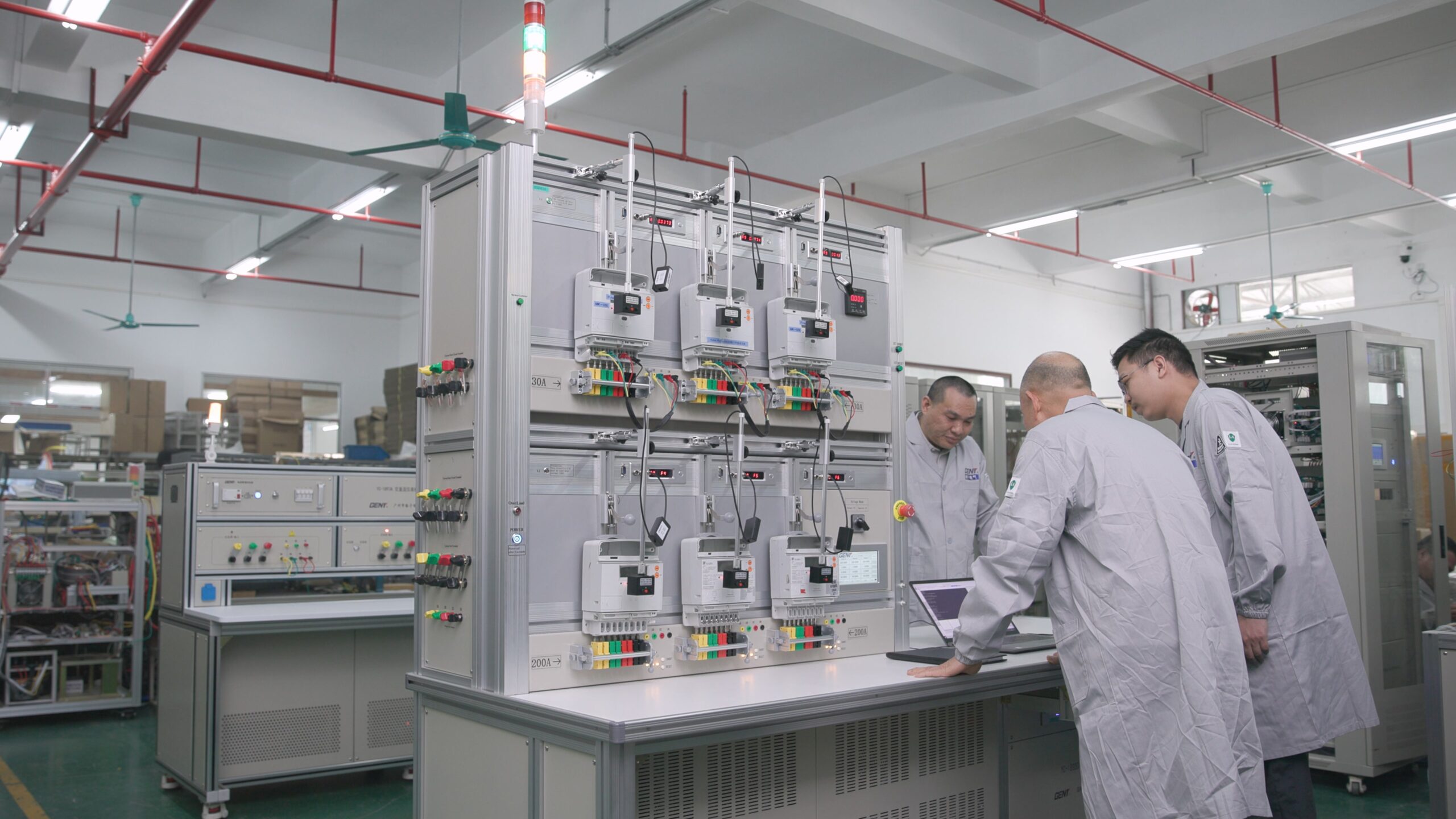
In field electrical work, instrument selection should be based on the task. A clamp meter is well suited to quick current checks, preliminary field assessment, and situations where breaking the circuit is not practical. Because it can measure current without interrupting the conductor, it is widely used in routine inspection, basic troubleshooting, and general maintenance.
Public technical materials also show that some clamp meters support additional basic functions such as voltage, resistance, and continuity measurement.
The instrument requirement changes when the task moves from quick checking to accuracy-related measurement, performance assessment, or application-specific testing. Public scope information for ANSI C12.1 shows that electricity metering standards cover acceptable performance criteria such as accuracy class designations, rated current, voltage, frequency, test currents, and environmental tests. NEMA also places electricity metering and meter mounting and test equipment within the broader professional category of electrical measuring equipment.
In practice, this means current checking is only one part of field work, while meter testing, calibration, and verification belong to a deeper layer of measurement tasks.
Quick Checks Are Where Clamp Meters Perform Well
The main strengths of a clamp meter are speed, convenience, and non-intrusive current measurement. It is useful for confirming whether current is present in a circuit, whether the load appears broadly normal, and whether a first-line field check can be completed quickly. For many routine maintenance scenarios, that is sufficient.
When the work requires higher-accuracy measurement, reference-based assessment, or standard-related evaluation, the focus shifts to result confidence, repeatability, and test conditions. In those cases, a dedicated instrument is often the more suitable choice.
Meter Testing Requires Higher-Accuracy Capability
In meter-related applications, the task may involve accuracy checking, reference measurement, or performance assessment. The public scope of ANSI C12.1 indicates that acceptable performance criteria for electricity meters include accuracy classes and corresponding test requirements.
For this type of work, obtaining a reading is not enough on its own. Accuracy level, repeatability, and the suitability of the test method also matter.
For meter testing, calibration, and on-site verification, portable standard meters and dedicated meter test instruments are generally better aligned with the task. They are more appropriate for reference-based measurement and other accuracy-related applications, especially for utilities, laboratories, and industrial users who require dependable results.
Dedicated Tasks Require Dedicated Instruments
Some applications are specialised by nature, and the tool boundary is clearer.
For CT/VT work, public materials from OMICRON show that dedicated test systems are designed for protection and metering current transformers, with automatic evaluation according to IEC and IEEE standards. For this type of task, basic current checking does not replace CT/VT performance verification. A specialised test instrument is usually the more suitable option.
Insulation assessment follows the same logic. Public Megger materials describe an insulation resistance tester as a portable instrument that gives a direct reading of insulation resistance. This kind of work is focused on insulation condition and equipment health, which places it in a different task category from general current checking.
Battery condition assessment also requires a more specific instrument. Public Hioki materials state that battery internal resistance and terminal voltage can be used to assess deterioration and remaining life, particularly in UPS and storage battery applications. For UPS systems, battery storage, and other critical backup applications, a battery internal resistance tester is generally the appropriate tool.
Match the Instrument to the Depth of the Task
From a field-work perspective, clamp meters, higher-accuracy meter testing instruments, and dedicated application-specific testers do not replace one another. They serve different levels of work.
Quick checks are about speed and convenience. Reference measurement is about accuracy. Dedicated testing is about task-specific functions and standard-related requirements.
For distributors, utilities, laboratories, and industrial users, a more practical approach is to define the test objective first and then select the instrument accordingly. This improves efficiency in the field and supports more reliable downstream decisions.
